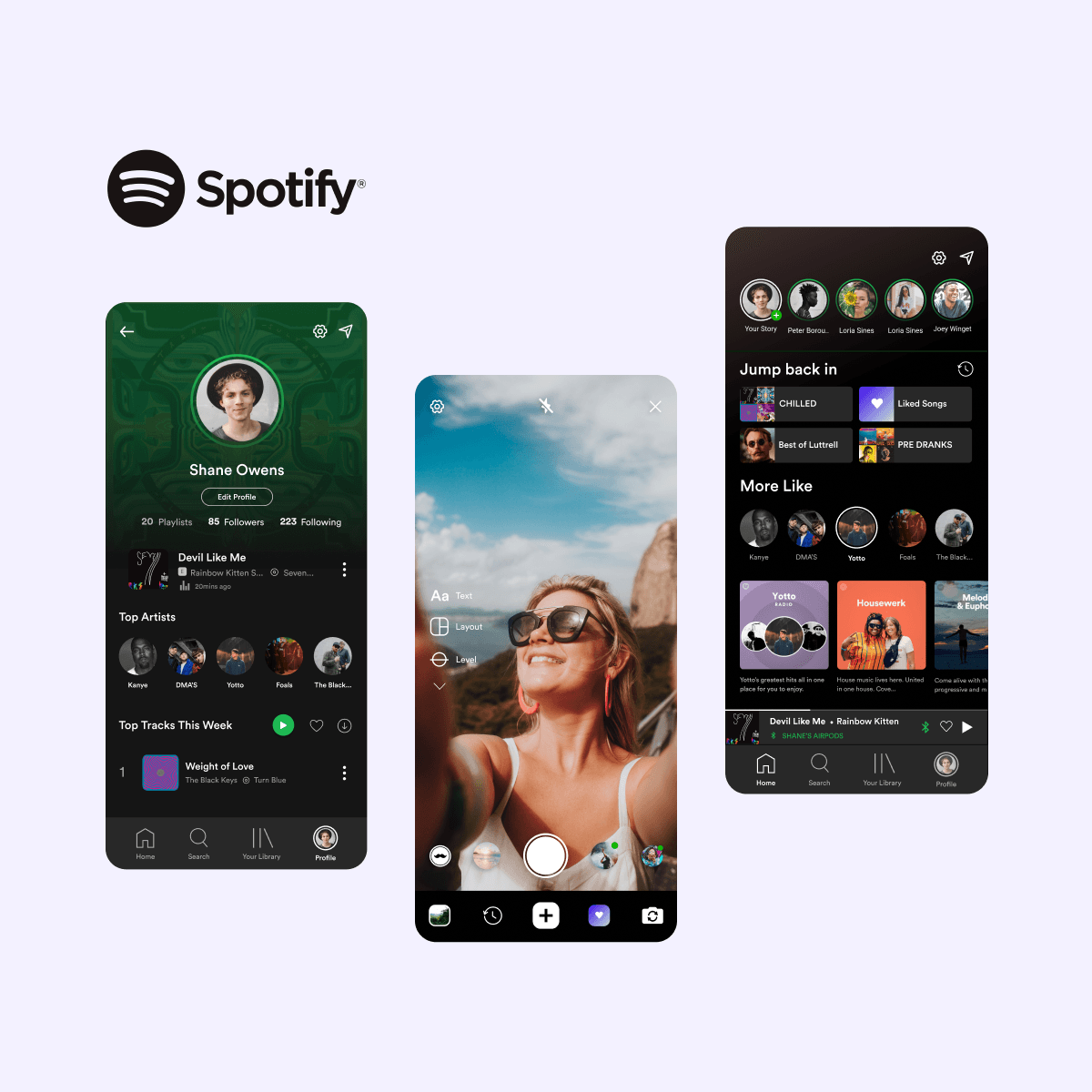
Spotify

Project

Making Spotify more social

Summary

Project

Exploring ways to enhance Spotify's sociability and sharing features to align with user needs for better engagement and interaction within the platform.

Making Spotify more social

Summary

Exploring ways to enhance Spotify's sociability and sharing features to align with user needs for better engagement and interaction within the platform.

Collaborators

I worked on this project on my own, for 3 months.

Responsibilities

User Research
Task Analysis
Low-fidelity Wireframing
Information Architecture
A/B Testing Prototyping

Summary

Exploring ways to enhance Spotify's sociability and sharing features to align with user needs for better engagement and interaction within the platform.

Collaborators

I worked on this project on my own, for 3 months.

Project

User Research
Task Analysis
Low-fidelity Wireframing
Information Architecture
A/B Testing Prototyping

Collaborators

Time Frame

I worked on this project on my own, for 3 months.

Responsibilities

User Research
Task Analysis
Low-fidelity Wireframing
Information Architecture
A/B Testing Prototyping

Challenges

Spotify excels as a music streaming platform but falls short in offering social connectivity. Users frequently expressed frustration with underutilised profiles, the cumbersome process of sharing music, and a lack of engaging discovery experiences. Our challenge was to pinpoint these pain points and craft solutions that would enhance the sociability of Spotify without compromising its core functionality.

Spotify excels as a music streaming platform but falls short in offering social connectivity. Users frequently expressed frustration with underutilised profiles, the cumbersome process of sharing music, and a lack of engaging discovery experiences. Our challenge was to pinpoint these pain points and craft solutions that would enhance the sociability of Spotify without compromising its core functionality.

Process

1. Research & Discovery:

We surveyed Spotify users to understand their frustrations, identifying three key pain points. From these insights, we created user personas and mapped customer journeys to uncover opportunities for improvement.

2. Rapid Prototyping:

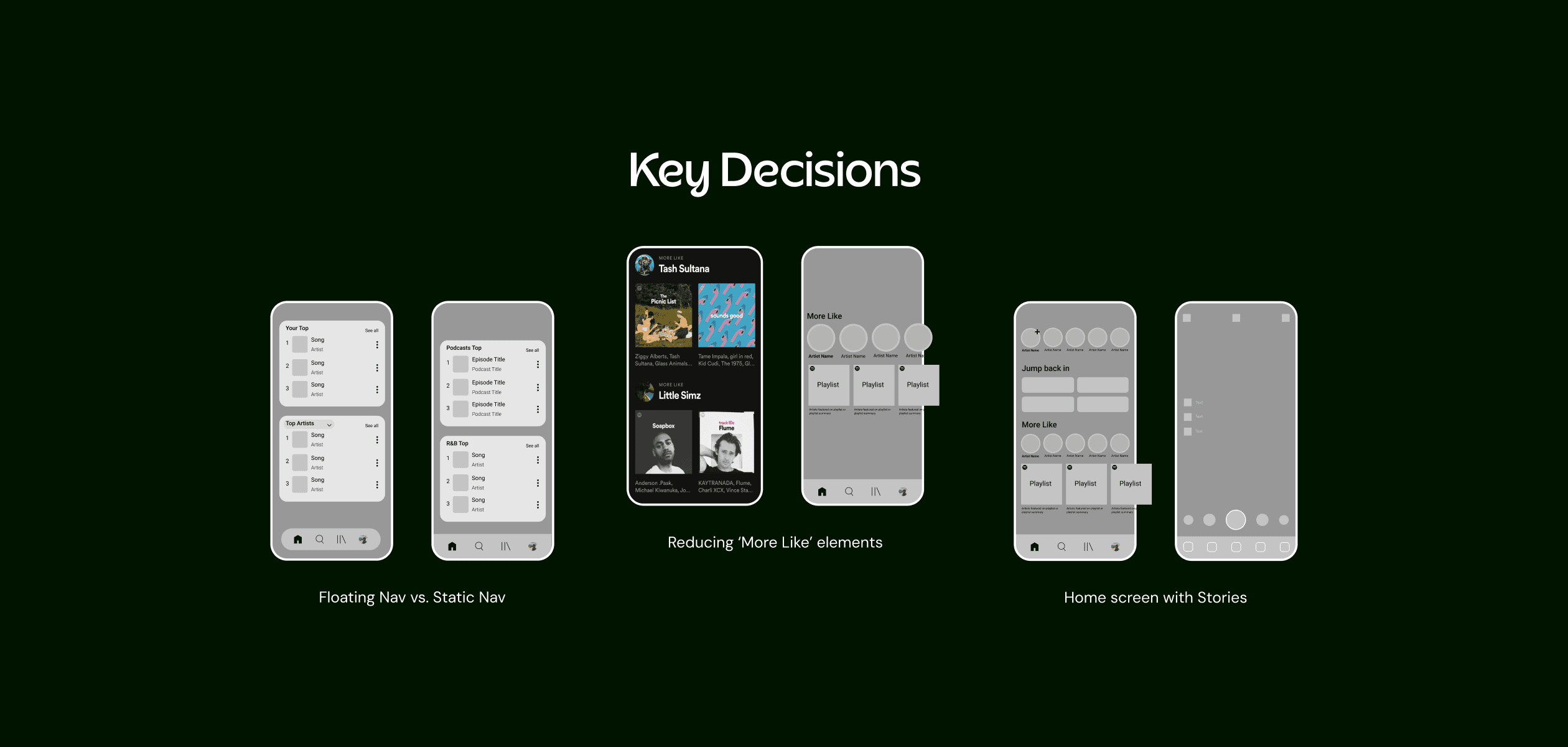
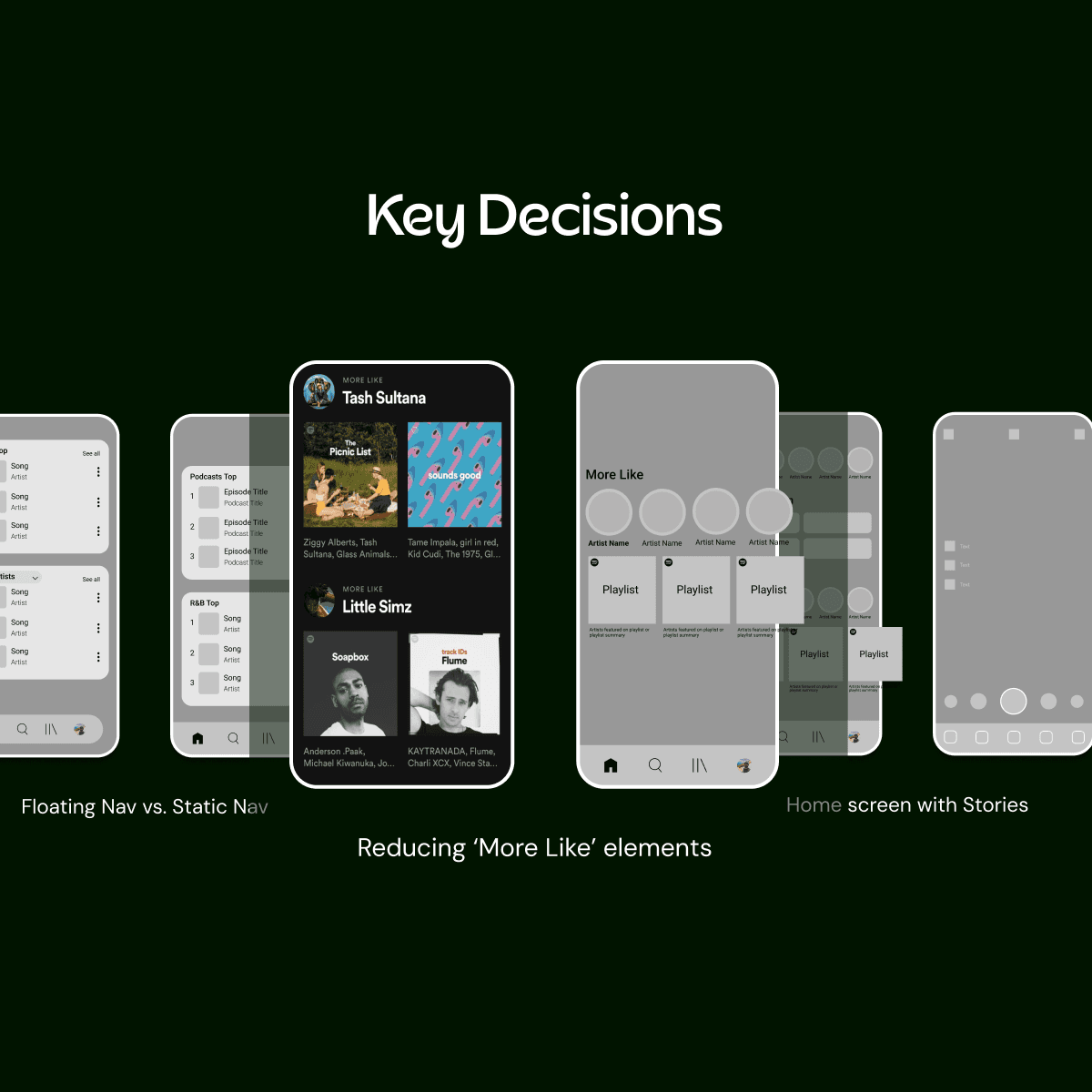
Through sketches and low-fidelity wireframes, we quickly explored solutions, using A/B testing to validate ideas and resolve disputes efficiently.

3. Iterative Refinement:

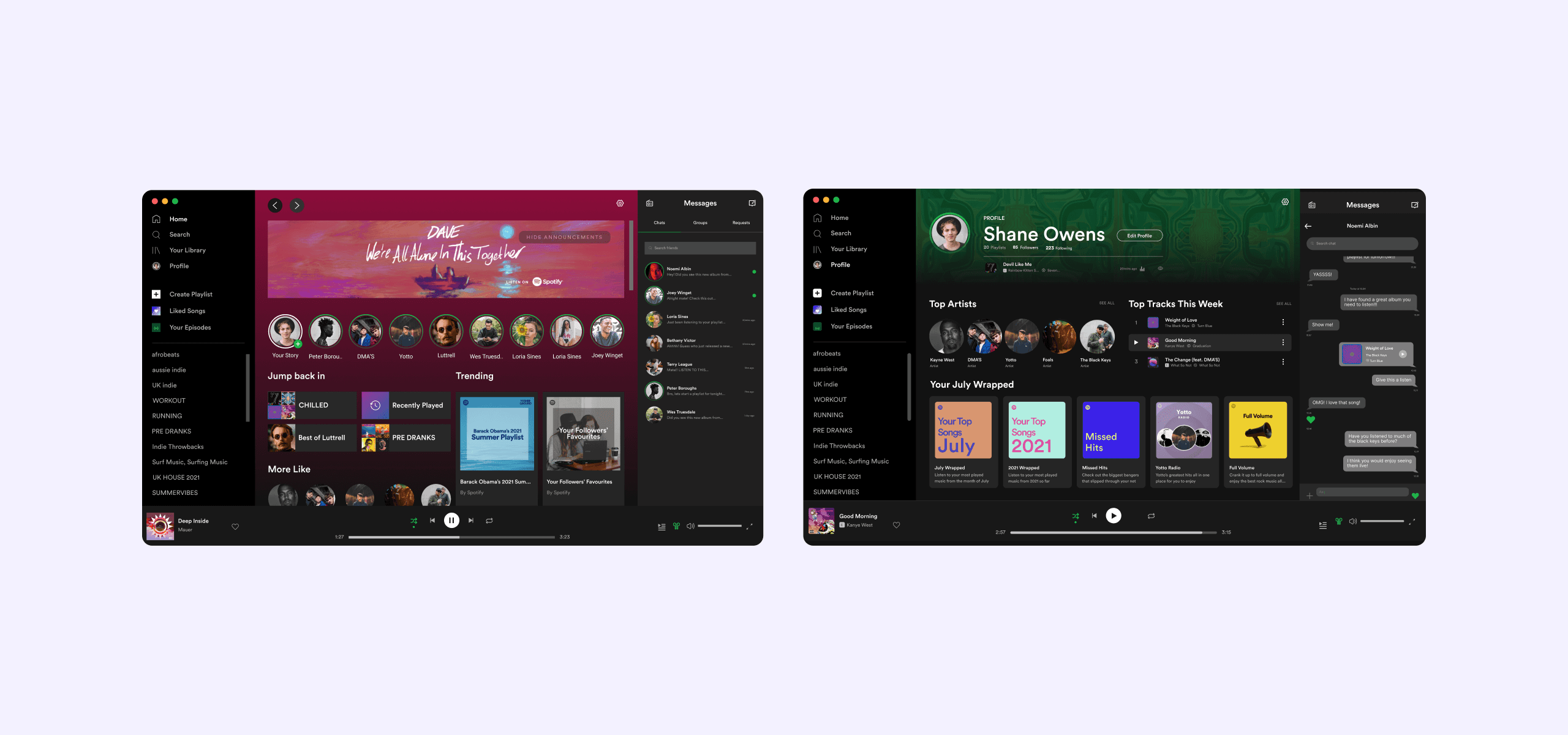
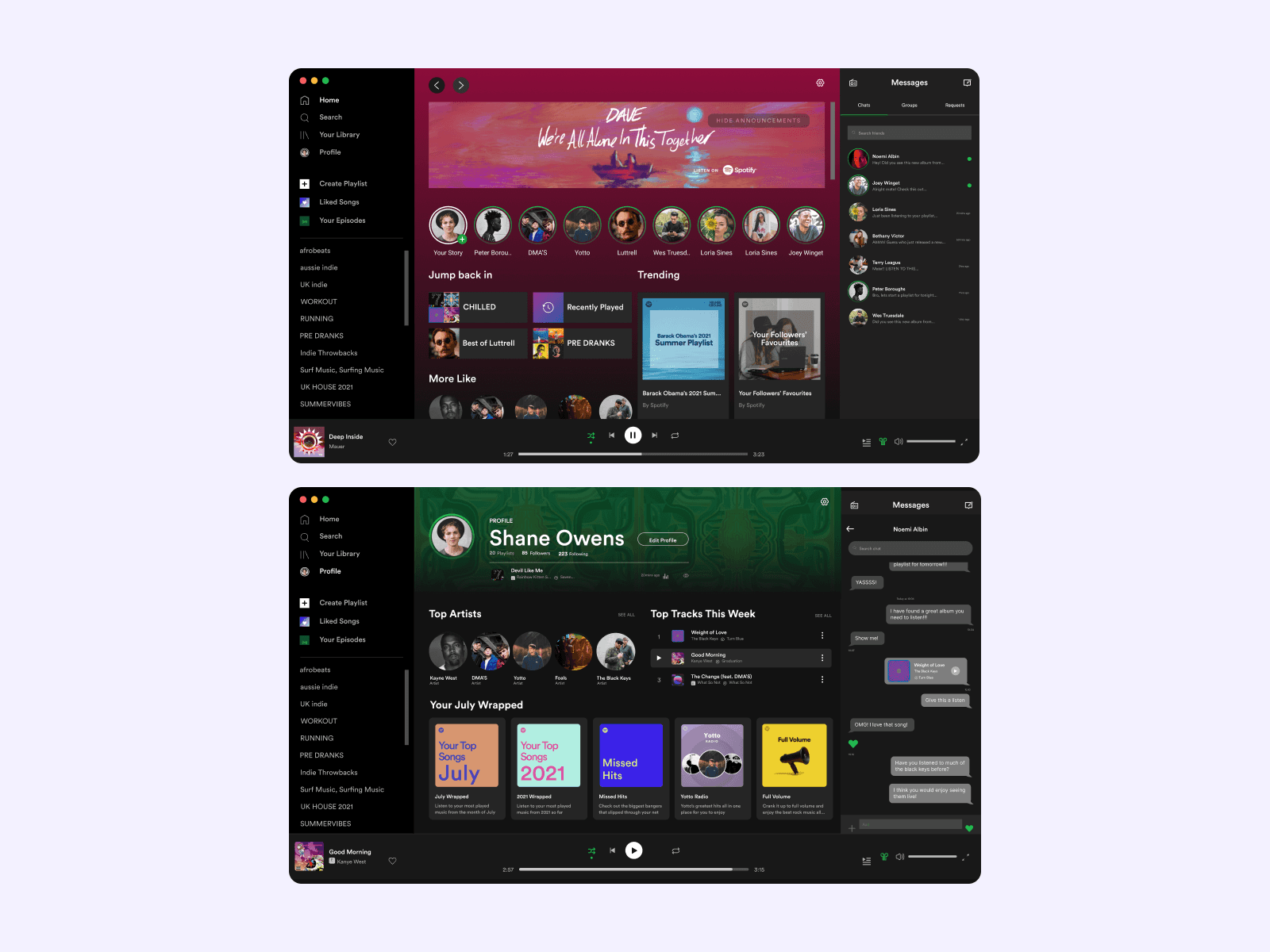
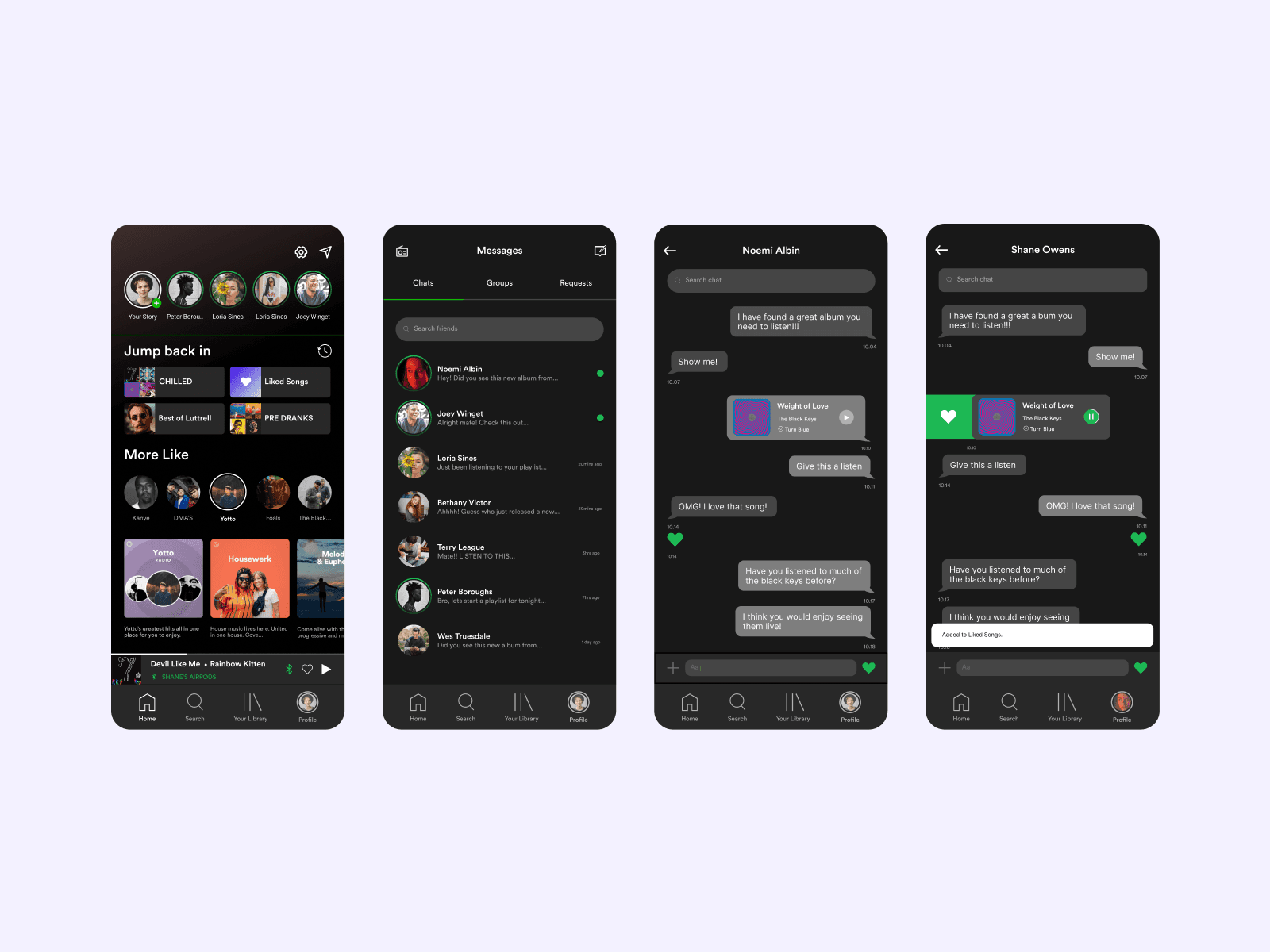
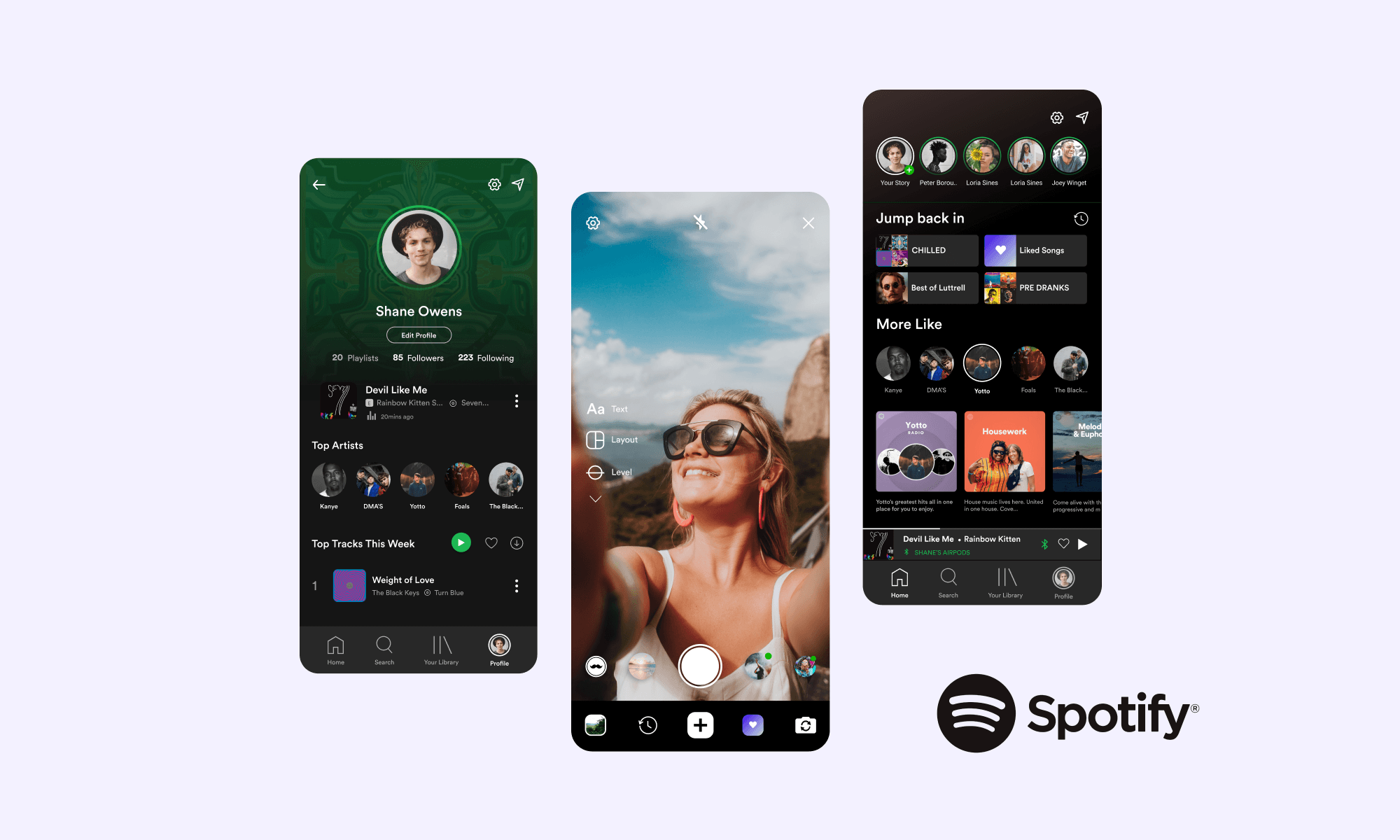
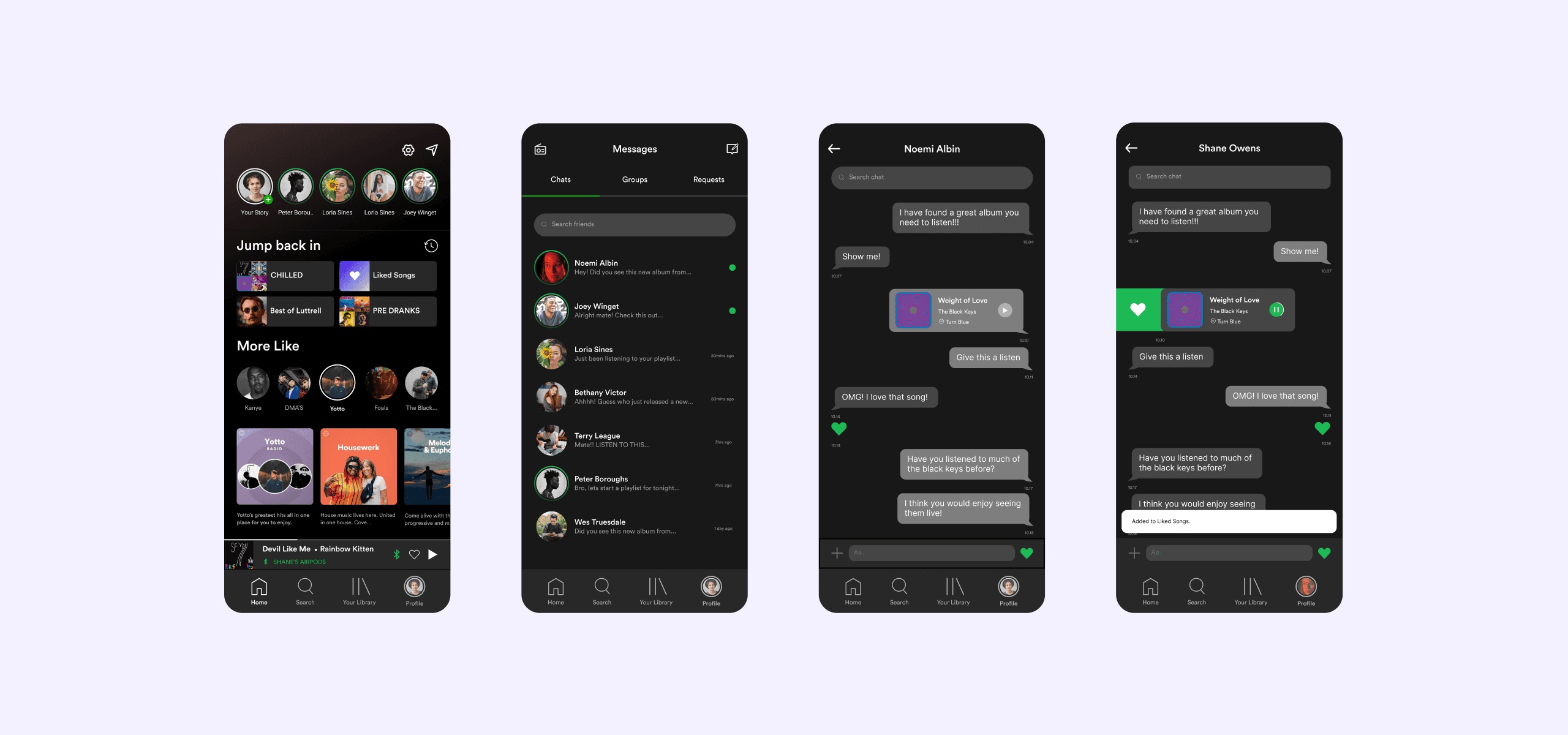
We integrated user feedback and restructured the app's information architecture, focusing on adding social features like Stories and enhanced profiles while streamlining sharing workflows for better engagement.
Solutions
The solutions I implemented brought about significant improvements:

  • Enhanced Pitch Process: By leveraging data analysis, we were able to make more informed decisions during pitches, optimising our planning hours and increasing our success rate.

  • Priority System: The introduction of the Priority system brought clarity and fairness to task allocation. Designers, developers, and QA teams could now focus on what mattered most without constant interruptions from PMs.

  • Accurate Capacity Tracking: Time tracking in internal meetings ensured that everyone's capacity was accounted for, leading to better workload management and preventing burnout.

  • Process Improvements: Throughout these initiatives, I continually critiqued our processes and sought ways to streamline them. My focus was on creating a more organized and efficient workflow that benefited everyone involved.

  • Enhanced Pitch Process: By leveraging data analysis, we were able to make more informed decisions during pitches, optimising our planning hours and increasing our success rate.

  • Priority System: The introduction of the Priority system brought clarity and fairness to task allocation. Designers, developers, and QA teams could now focus on what mattered most without constant interruptions from PMs.

  • Accurate Capacity Tracking: Time tracking in internal meetings ensured that everyone's capacity was accounted for, leading to better workload management and preventing burnout.

  • Process Improvements: Throughout these initiatives, I continually critiqued our processes and sought ways to streamline them. My focus was on creating a more organized and efficient workflow that benefited everyone involved.

  • Enhanced Pitch Process: By leveraging data analysis, we were able to make more informed decisions during pitches, optimising our planning hours and increasing our success rate.

  • Priority System: The introduction of the Priority system brought clarity and fairness to task allocation. Designers, developers, and QA teams could now focus on what mattered most without constant interruptions from PMs.

  • Accurate Capacity Tracking: Time tracking in internal meetings ensured that everyone's capacity was accounted for, leading to better workload management and preventing burnout.

  • Process Improvements: Throughout these initiatives, I continually critiqued our processes and sought ways to streamline them. My focus was on creating a more organized and efficient workflow that benefited everyone involved.

  • Information Architecture Optimisation: Revised the app's taxonomy to integrate new social features cohesively while maintaining ease of use.

  • Prototyping & Testing: Used low-fidelity prototypes to test solutions early, reducing risk and ensuring alignment with user expectations.

  • Collaborative Design Approach: Incorporated user feedback iteratively, refining designs to balance user needs and technical feasibility.

Outcome

The project resulted in a cohesive set of social features that addressed user pain points, including intuitive Stories, engaging profiles, and simplified sharing mechanisms.

Key Learnings:

  • Empathy in Design: Developing personas and mapping journeys helped us create user-focused solutions.

  • Iterative Prototyping: Early low-fidelity testing saved time and ensured alignment with user needs.

  • Collaborative Problem-Solving: A/B testing provided a structured method to resolve disputes and validate design decisions.

This project exemplifies how combining user research, strategic design thinking, and collaborative methods can create impactful solutions for enhancing user experiences.